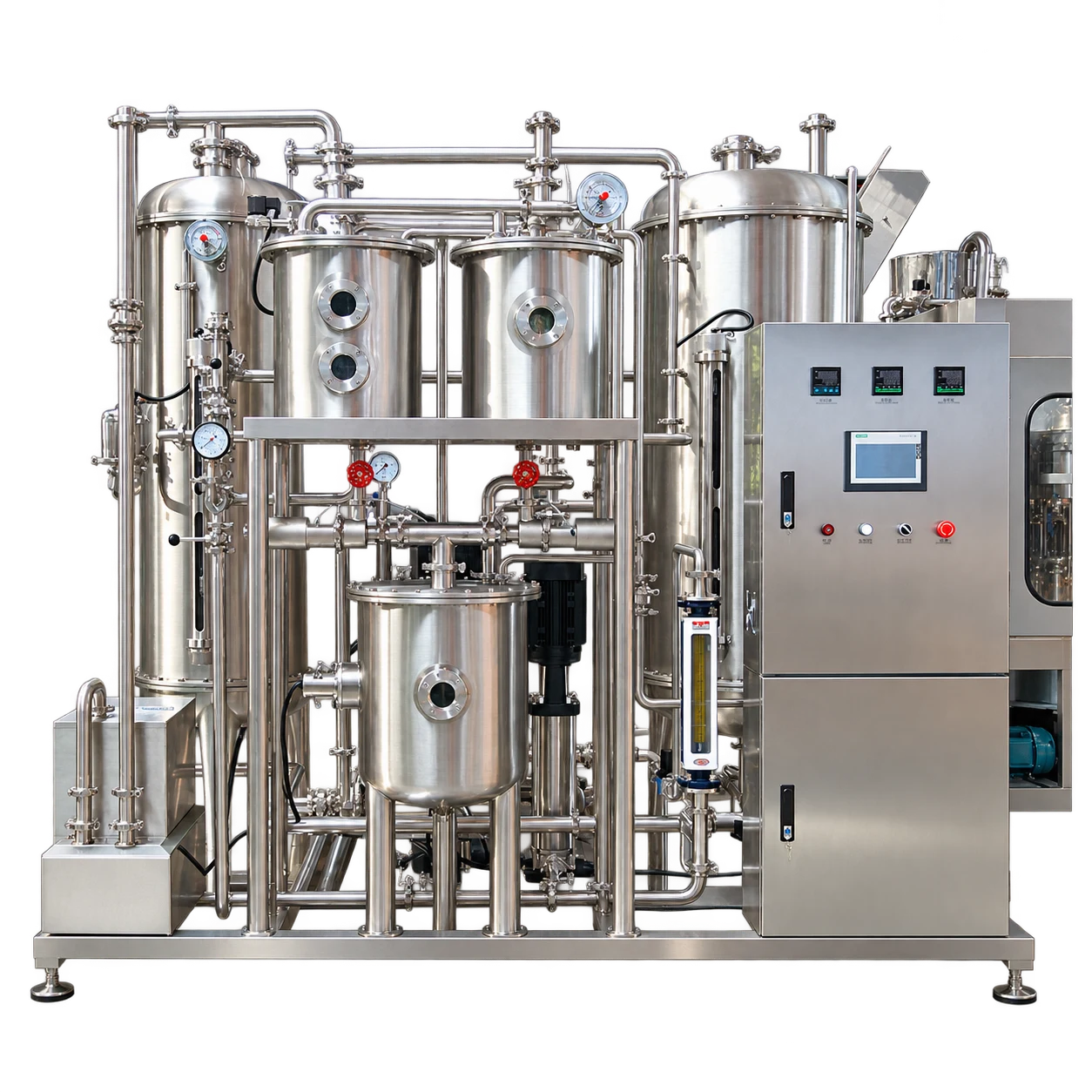
Blend · Homogenize · Sterilize / Juice & tea

Juice Pre-treatment System

Prepares juice and tea drinks for filling: sugar dissolving and blending, optional vacuum deaeration, homogenization and tubular sterilization. A steam boiler and automatic CIP support the line.

Process route
5 steps to filling
Utilities
Boiler
Cleaning
Automatic CIP

Process route

From sugar to filling.

Steam from the boiler heats the jacketed equipment; the CIP system cleans every part that touches the product.

  1. 01Sugar dissolving
  2. 02Blending
  3. 03Vacuum deaerationOptional
  4. 04Homogenization
  5. 05Tubular sterilization
  6. 06Filling

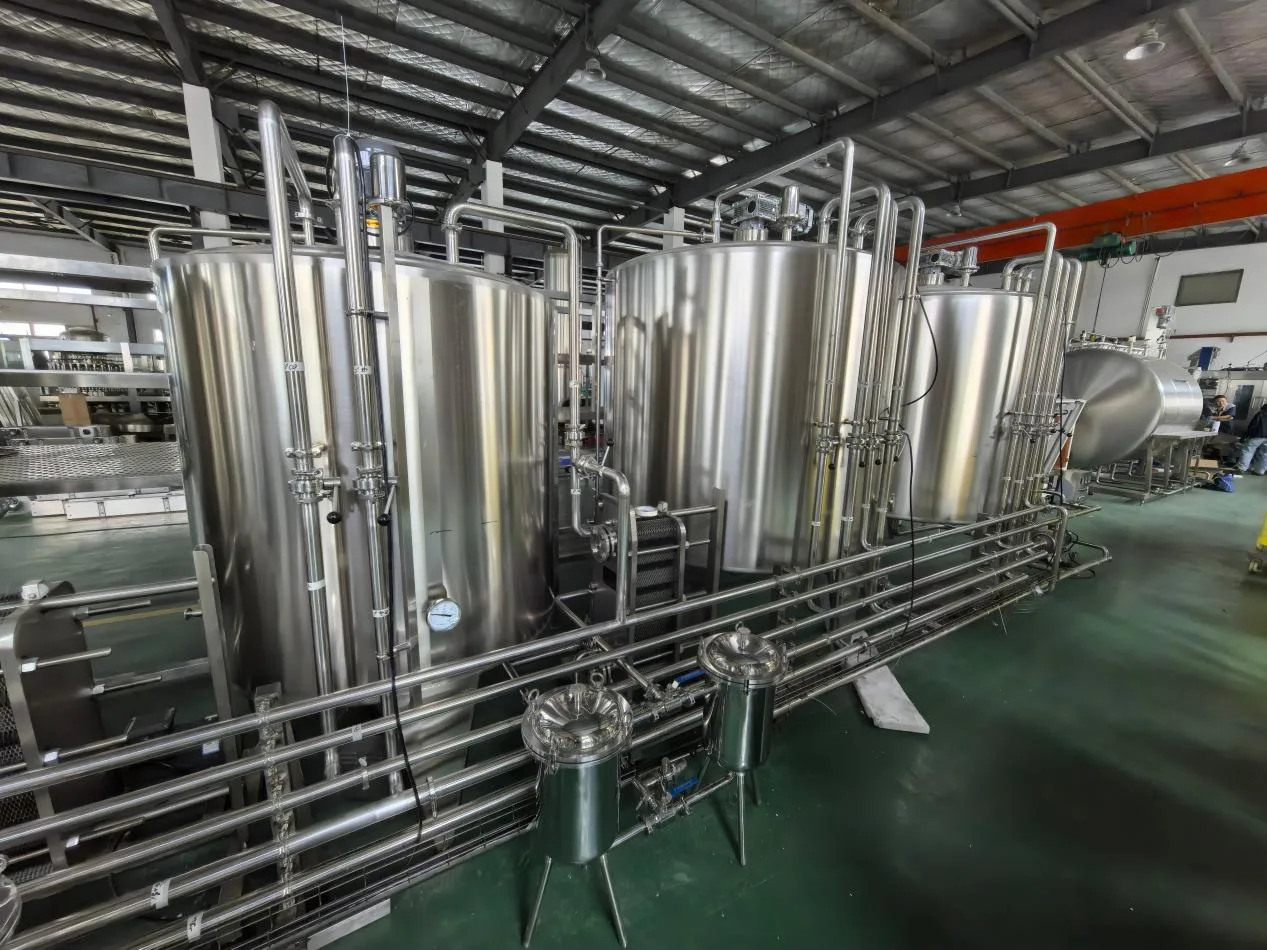
Factory footage

See the tanks on the workshop floor.

Factory footage of blending and process tanks with their pipework.

Equipment

Equipment in the system.

7 units, from syrup preparation to utilities and cleaning, in process order.

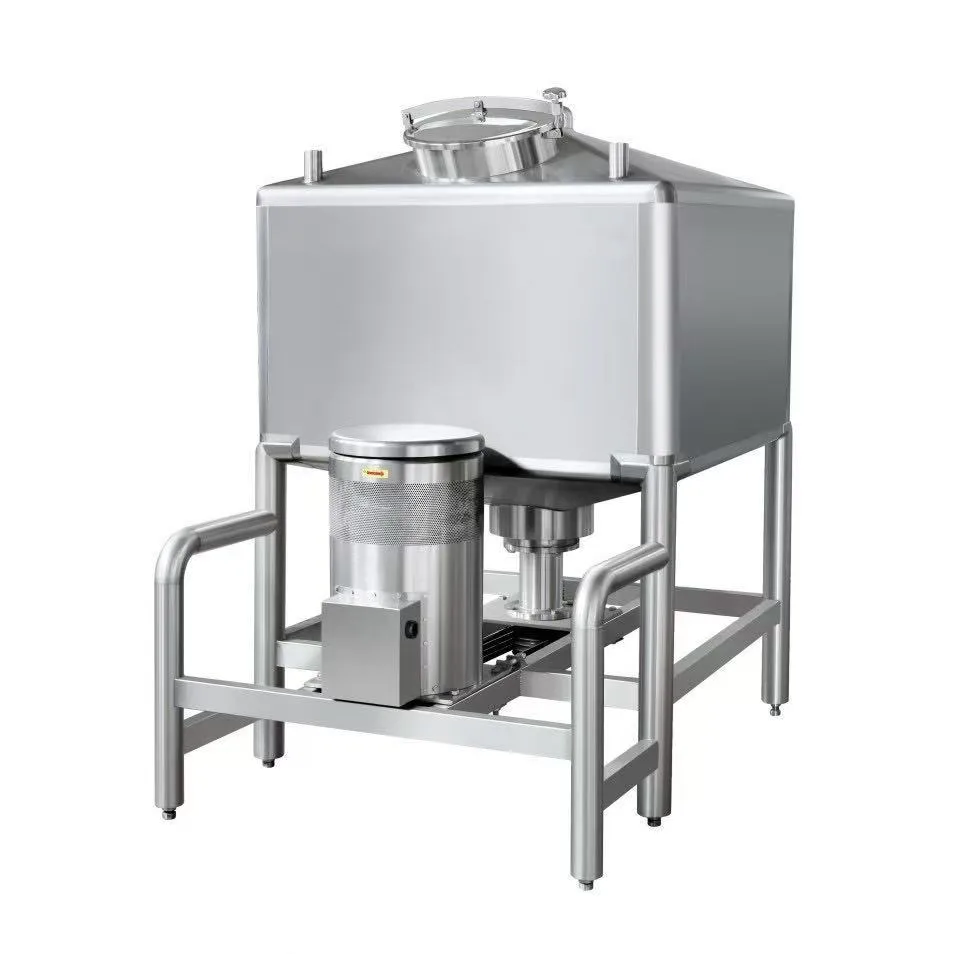
Stainless-steel high-shear sugar dissolving tank on a frame with bottom-mounted shear unit

01Syrup preparation

High-shear sugar dissolving tank

Dissolves white sugar completely in purified water under heating, stirring and high shear. The result is a syrup of stable concentration to the Brix standard, with no undissolved sugar and no lumps, ready for the blending tanks.
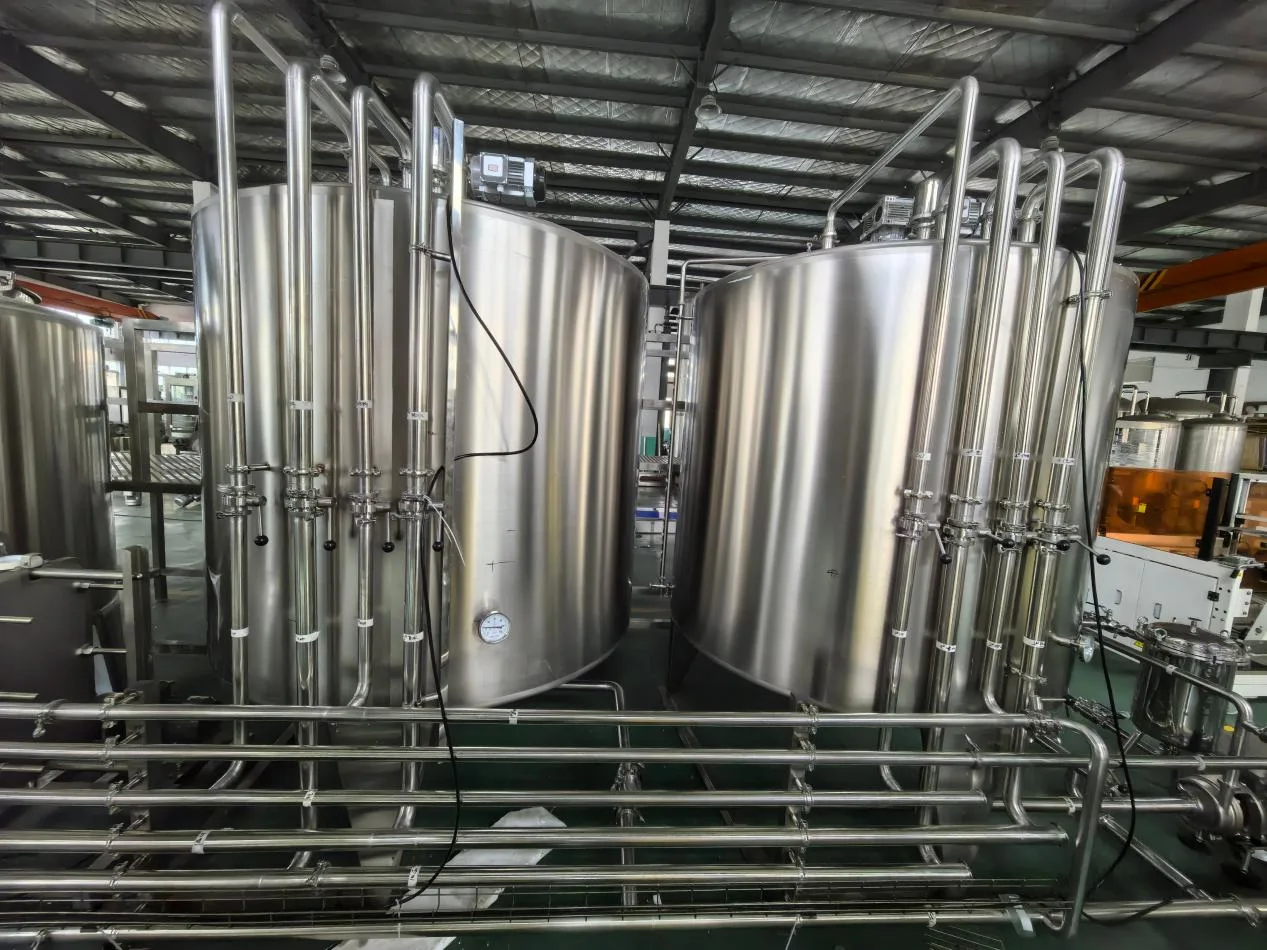
Stainless-steel blending tanks with process pipework

02Syrup preparation

Blending tanks

Receive the sugar syrup from the dissolving tank and add all remaining ingredients, producing a final product with consistent flavour and Brix. The blended product is sent on to sterilization and filling.

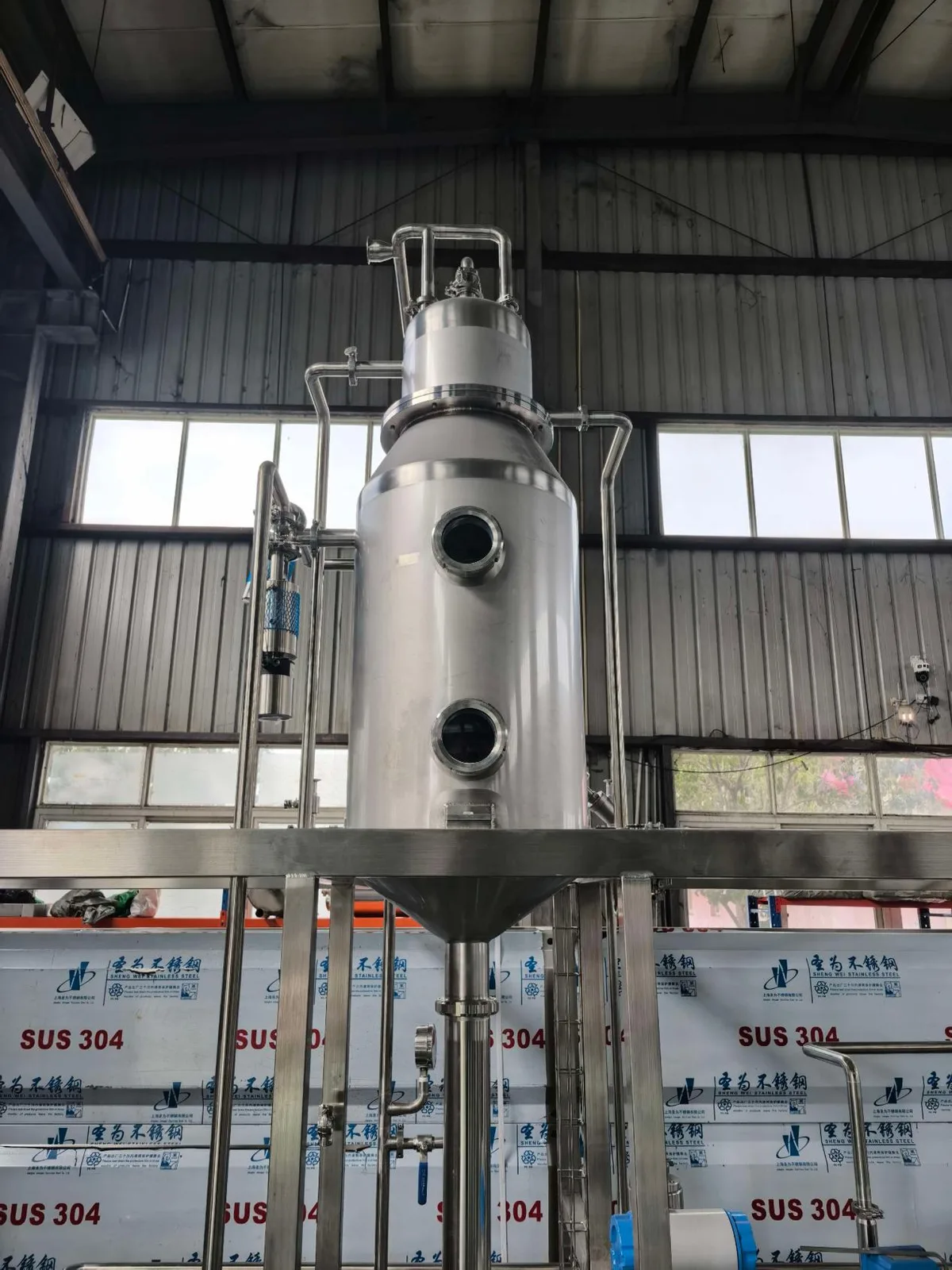
Vertical stainless-steel vacuum deaeration vessel

03Product treatment

Vacuum deaerator

The product is sprayed into a thin film inside a vacuum vessel. Dissolved oxygen and free bubbles are released from the liquid and drawn off by the vacuum pump, and the deaerated product is pumped onward. Cleaned by the CIP system.

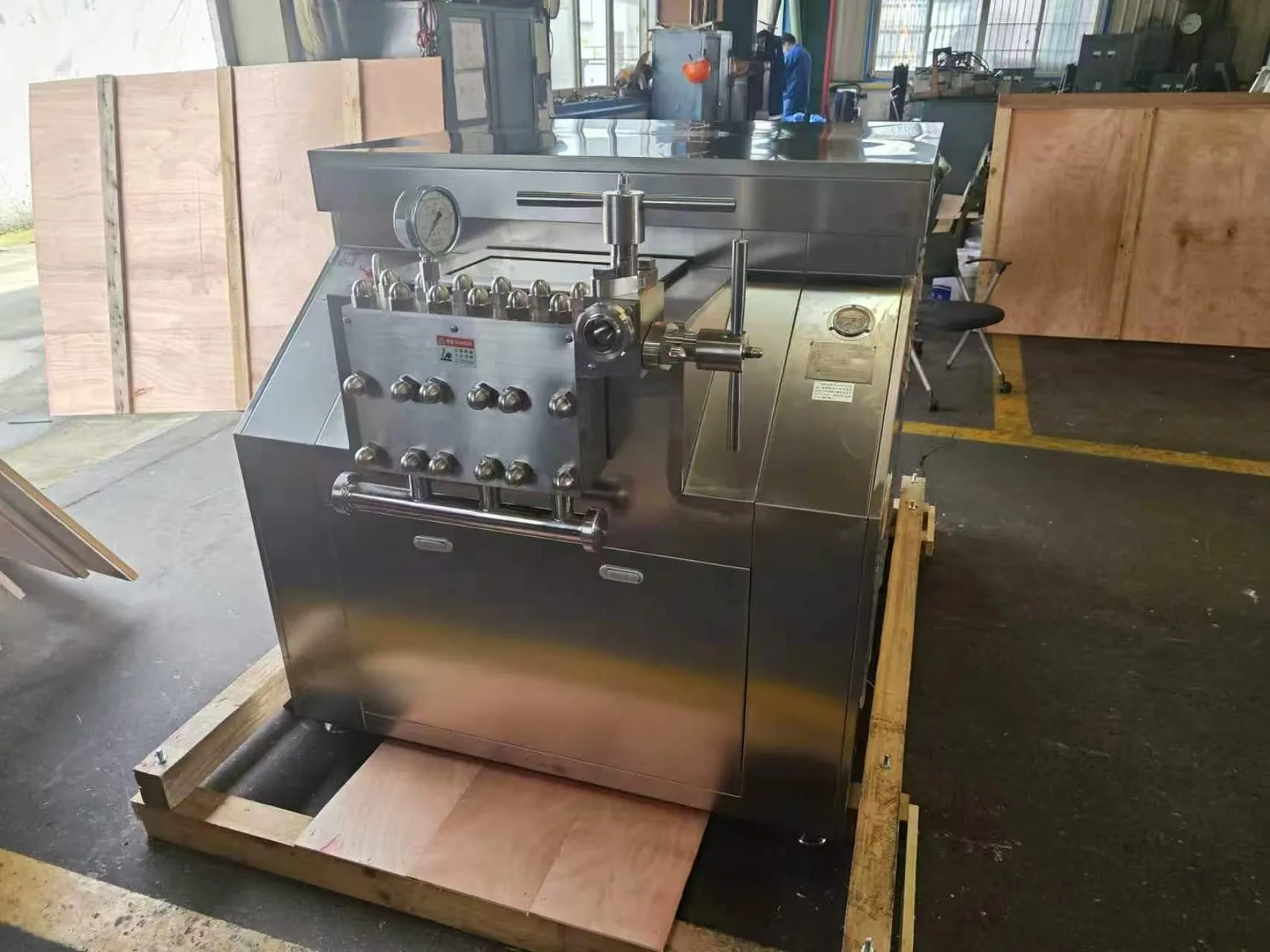
Stainless-steel high-pressure plunger homogenizer with pressure gauge and homogenizing valve, on its shipping pallet

04Product treatment

Homogenizer

A plunger pump pressurizes the product, usually to 15–25 MPa (30 MPa or more for plant-protein milk), and forces it at high speed through the narrow gap of the homogenizing valve. Shear, impact and cavitation break fat globules and pulp particles down to micrometre size and disperse them evenly through the liquid. Two-stage homogenization is most common: the first stage breaks particles down, the second keeps them from clumping again. Cleaned by the CIP system.

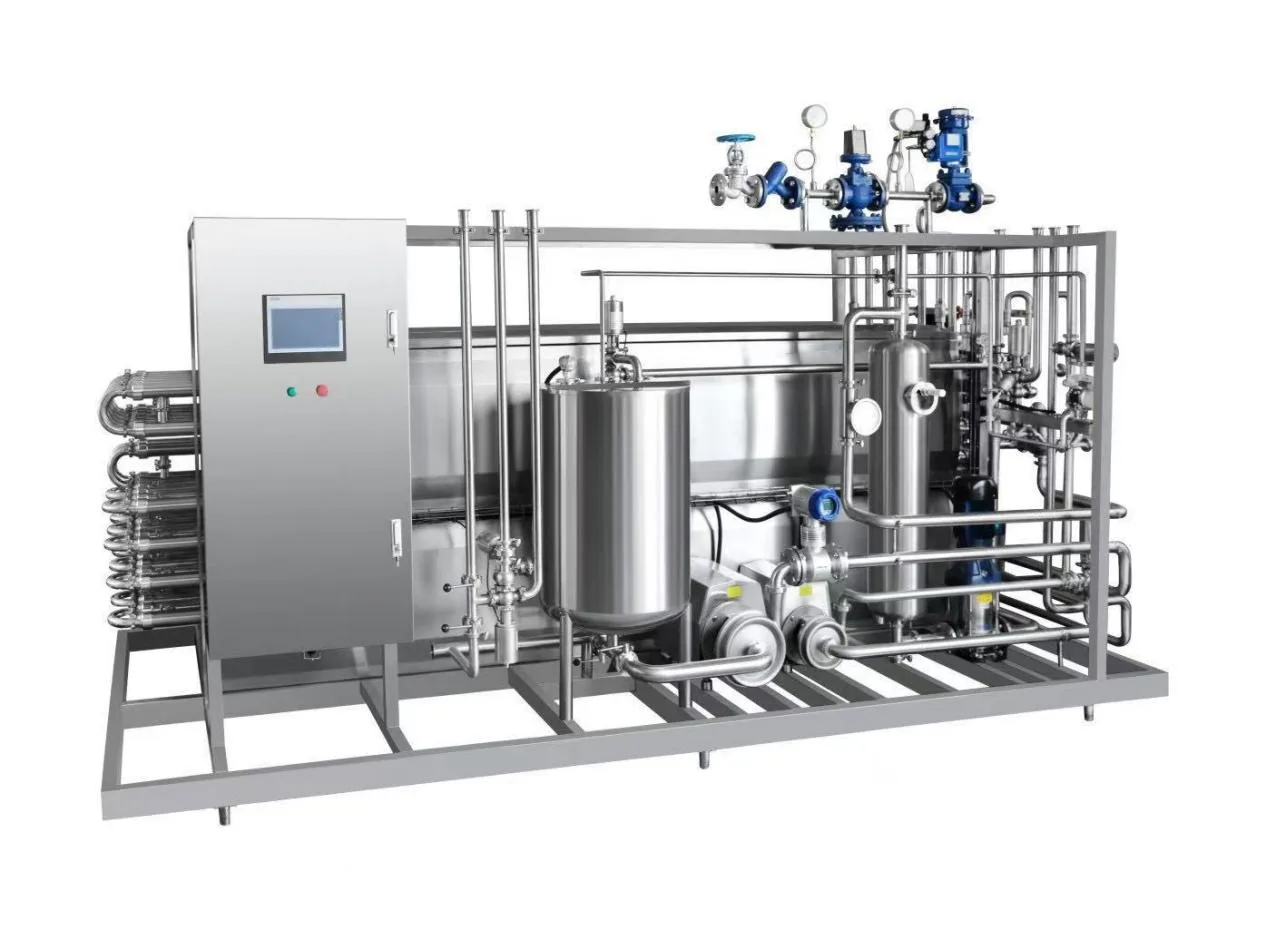
Tubular sterilizer skid with heat-exchange tubes, holding tank and control cabinet

05Product treatment

Tubular sterilizer

The product flows continuously through stainless-steel tubes and is heated indirectly by hot water or steam, passing through preheating, holding and sterilization, heat recovery and cooling. Temperature control is fully automatic, and the unit is cleaned by the CIP system.

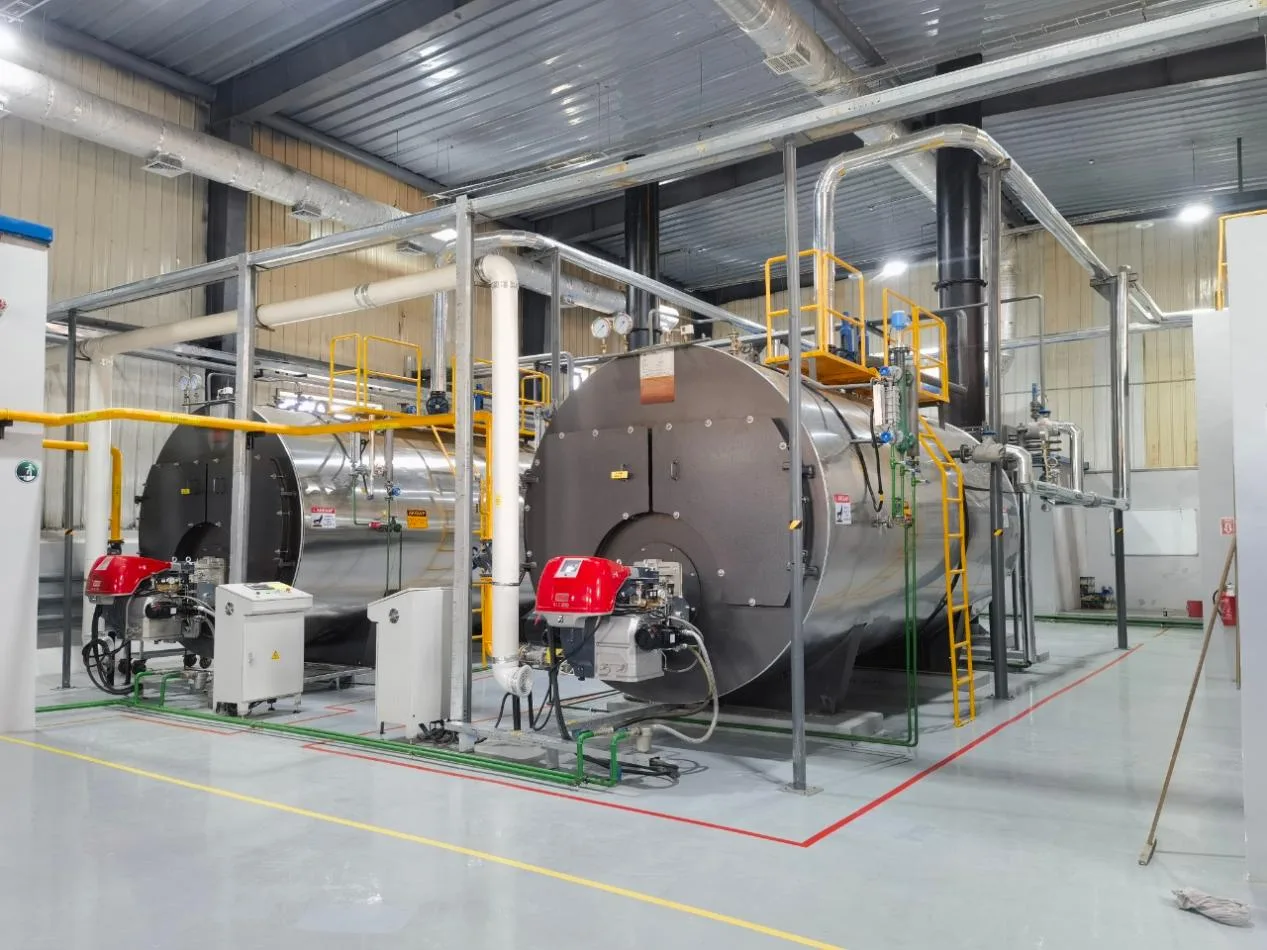
Two horizontal steam boilers with burners in a boiler room

06Utilities

Steam boiler

The heat source for the entire line. It produces saturated steam at stable pressure and dryness to heat all jacketed equipment and the CIP system.

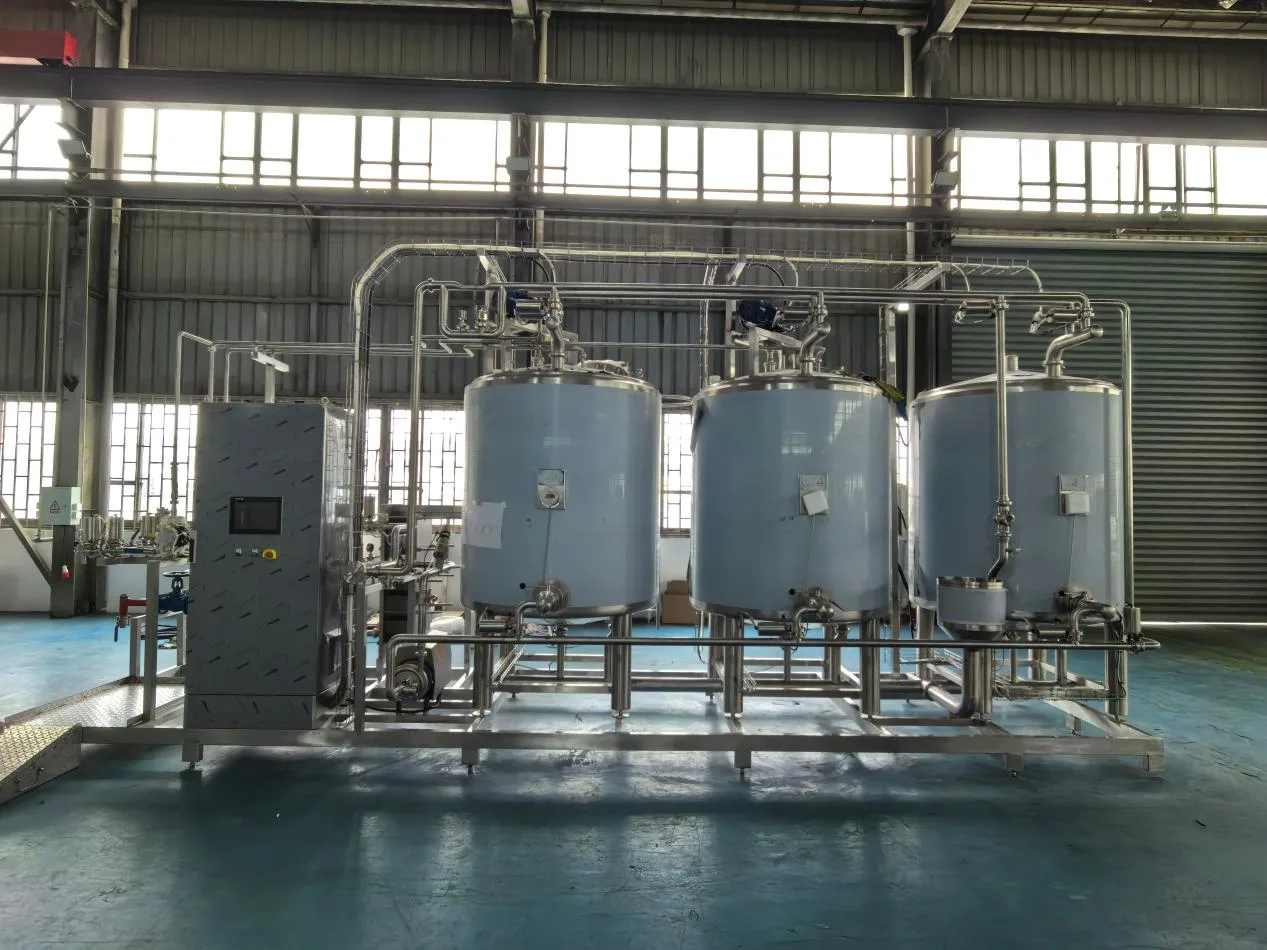
Automatic CIP station with three insulated tanks and a control cabinet

07Cleaning

Fully automatic CIP system

Cleans in place, with no need to dismantle tanks, pipelines or filling valves. At the press of a button, the PLC runs the complete online cleaning and disinfection programme for all equipment that comes into contact with beverage ingredients.

Plan your pre-treatment

Start with your recipe.

Share the beverage recipe, target output and available utilities. We will recommend the pre-treatment equipment and how it connects to your filling line.

Request a proposal